Most Databricks cost problems do not start with runaway clusters or spectacular mistakes. They start with missing context.
A warehouse serves ten dashboards. Five teams run ad hoc analysis. Three scheduled jobs execute every hour. DBU consumption rises month after month, but nobody can confidently explain which workload created the increase. The bill arrives. The observability does not.
"If you cannot attribute spend, you cannot govern it."
The hidden cost of untagged workloads
Databricks provides excellent visibility into queries, warehouses and performance metrics. What many organisations lack is a reliable way to connect activity back to a business owner, project, department or cost centre.
Without that attribution, every cost review becomes detective work. Teams debate ownership. Finance receives vague explanations. Optimisation efforts stall because nobody is completely certain where the money is actually going.
Cost leakage loves environments where accountability is unclear. The easiest workload to optimise is the one you can identify. The most expensive workload is often the one nobody realises they own.
Query tagging fixes the missing link
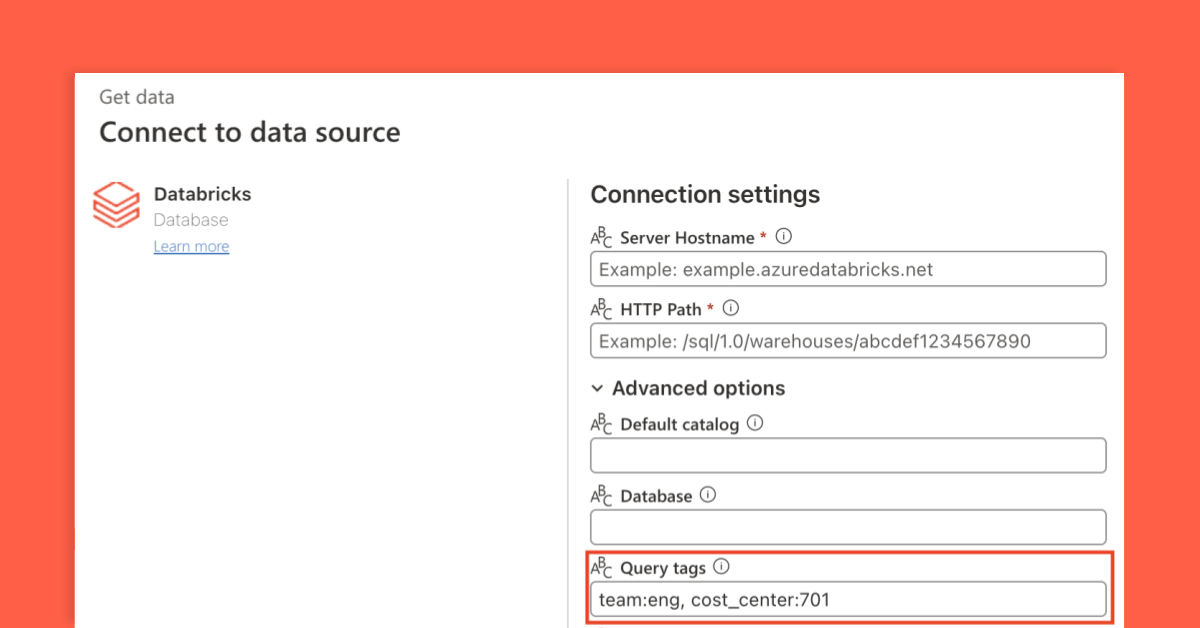
Databricks SQL now supports query tags, allowing workloads to be labelled with metadata such as team, project, environment, application or cost centre.
A query can be tagged with values like:
team:finance
project:revenue-dashboard
cost_center:1234
Those tags become available in query history, creating a direct connection between warehouse activity and business ownership.
Suddenly, the conversation changes from:
"Why did warehouse costs increase?"
to:
"The revenue reporting project generated 42% of warehouse consumption last month."
The practical answer
Query tagging will not reduce costs by itself. It does something more important first: it makes costs explainable.
Once workloads are tagged consistently, organisations can build meaningful chargeback models, identify expensive consumers, track project-level spend and spot unusual behaviour before it becomes a budgeting surprise.
The biggest Databricks cost risk is often not overspending. It is not knowing who spent the money. Query tagging closes that gap and turns warehouse consumption from a mystery into something that can actually be managed.